Movement and exercise with MS isn’t the easiest at times. Different people are affected by the disease in various ways. Some people run marathons with MS, others are less mobile and need to remain seated. I fall in the middle of that spectrum. On a very good day, I can feel triumphant in reaching 10k steps. On a bad day, I have trouble reaching the bathroom.
But staying as active as possible, even if only in the home is important. At the very least, it’s important to maintain our existing health and function as long as possible. Studies are also showing the importance of movement for longevity and retaining cognitive and physical functions as we age. Peter Attia, the author of Outlive, persuasively makes the case for regular movement, particularly strength training. David Sinclair, the author of Lifespan, also emphasises its necessity for overall health and longevity.
Personally, I have symptoms that limit how much and what types of movement I am able to do. These include fatigue, vertigo, joint and nerve pain. Other symptoms are coordination problems, muscle weakness, and stiffness. In particular, heat is an issue which limits the type of exercise I choose to participate in.
Benefits of movement for Multiple Sclerosis
Exercise and movement have various benefits according to the MS Trust. They help with strength, mobility, and stability for people with MS. They also assist in bowel and bladder function. It has also been shown to help with mental health – improving mood and reducing depression and anxiety. From my own experience, it’s easy to fall into a downward spiral. Self-pity and loathing can happen when your body won’t do what you want it to do. Anything that helps us stay more positive is a bonus.
How I incorporate movement and exercise into my life
My exercise routine has been limited to low-impact activities that don’t cause me to overheat or injure myself from balance issues. If you’re wondering how to get started, my advice is to do what you can. Only continue for as long as you are able. If you can only manage 5 minutes, then do 5 minutes and be proud of it. Start somewhere and build up when you start to feel stronger! And when you have an off day, just try again tomorrow.
One of the ways I try to get daily movement in is doing either yoga or pilates on a chair. Having the chair for support has meant I can have a consistent routine, and I’m able to do a minimum workout even on a bad symptom day. Several MS organisations have free seated workouts available on their YouTube channels. Personally I really enjoy the seated classes available online by Nadia Narain and Caroline Sandry.
- Yoga – This was the first one I started doing daily. Initially, I just did the chair session. As I started to feel better, I incorporated the other two sessions. I rotated through them during the week. I find the ground flow session particularly relaxing. Stress negatively affects multiple sclerosis. One major benefit of incorporating yoga into our lives is relaxation. That alone makes it worth a try.
Nadia also offers a second seated series focused more on strengthening. I found these to be a step up from her first series and a little more challenging.
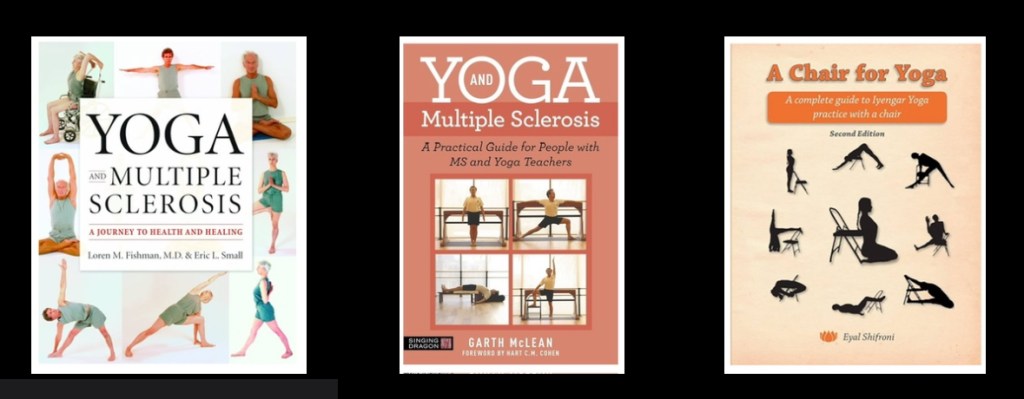
I have three other yoga books at home which I use. These books outline poses and adjustments to help with MS using Iyengar yoga. The method uses props to help people achieve proper alignment and positioning.
Dr Terry Wahls is a medical doctor with MS and author of the Wahls Protocol. She says it is important to incorporate movement into your daily life: “There should never be a day when you’re not doing some part of your movement therapy, even if it’s lighter exercise like stretching.”
- Pilates Many years ago I tried a pilates class in a gym. It nearly killed me. In contrast, Caroline Sandry’s DVDs are relaxing and enjoyable. They are accessible for beginners and I was thrilled to find she had a seated series I could use.
Often, these seated series are all I can manage but I feel healthier and stronger when I do them. I feel much more relaxed and ready for the day after a good stretch and some movement to loosen up the joints. Incidentally, both Nadia and Caroline have pregnancy series which I used as well. If there are any moves you can’t do, just sit them out or adapt them and don’t worry about it!
Other movement I try to incorporate where time and symptoms allow
- Swimming and Aqua aerobics – Movement in water is a good way to get around the overheating issue with MS. Swimming is an excellent all-round exercise to improve flexibility, strength, and fitness. You can go as gently or as rigorously as you like. Aqua aerobics was the way I found to get some real cardio in without overheating. It also helped avoid too much pain in my joints. And it’s just good fun to be splashing around in a pool.
- Dance – I genuinely believe if you find something fun and enjoyable you’re more likely to do it. These days, there are so many dance fitness options either online or in local community centres. Personally, I’d rather be having fun to music than trying to keep up with impossible standards in a gym. But that’s just me.
- Stationary bike – I have a fold up stationary bike that fits in my cupboard. I never put the resistance up. The mere act of cycling the pedals lubricates the joints and prevents stiffness in the knees. I have found that after long periods of relapses and being quite sedentary, I’m faced with a new set of mobility pains and challenges. This is a simple way to counteract that. It’s also a really good calorie burner for keeping weight in check and you can read or watch a favourite show at the same time.
- Walking – If you are able, walking anywhere for any distance is good for you. It’s a light cardio workout, it stretches out the body and is brilliant for the mind. A walk in any local green space will do wonders for your mood and health.
- Qigong – This is one I’m about to try which looks gentle yet is apparently very beneficial. It comes from an eastern medicine approach aimed at keeping Qi (or energy) flowing freely through the body. It is gentle, slow and meditative. Let me know if you’ve tried it and what your experiences have been?

The importance of setting your own goals
Those of us living with chronic illness need to break free of comparison. We may not be able to do some of the things that those without our symptoms can but we can still stay as individually healthy as we can. Let’s stick to our goals on our own journey and not worry about how we compare to anyone else.
For me, I have a personal list of “whys” to keep me motivated to stay active. They include:
- Staying as healthy as I can daily
- Stopping my disease progressing any further
- Maintaining my independence as long as possible
- The ability to be an active mother to my children
- Keeping my cognitive function as long as possible
- Staving off depression and negative thinking
Some last thoughts from me on this:
- Listen to your body first and foremost – if you are in too much pain, or your limbs are too numb, then don’t try to be a hero. It’s probably better to rest until your symptoms improve than risk injuring yourself or a full blown relapse.
- Don’t compare yourself – Sure, those people in the gym lifting huge weights with perfect physiques may look healthier than you but we don’t know their situation. In all likelihood, they won’t have your illness or your pain so it is silly to make any comparisons. Doing what is within your abilities to stay healthy should be enough to feel proud of yourself.
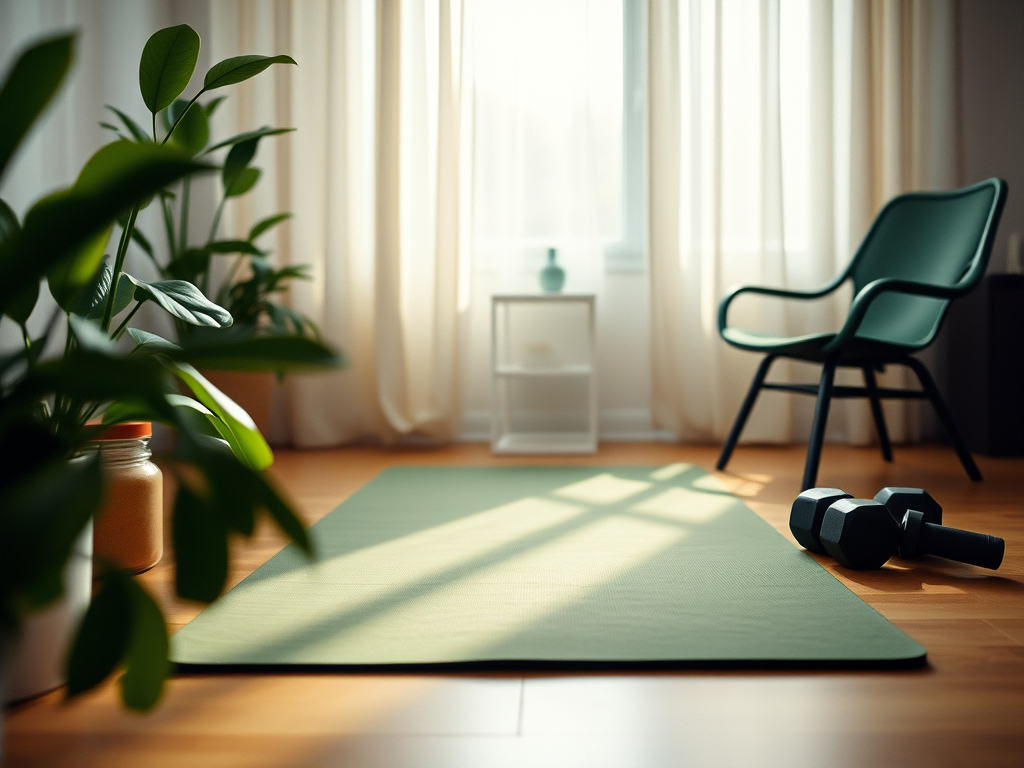
- Nudge yourself into good habits – Humans are useless at willpower and are creatures of habit. There are things we can do to set ourselves up for healthy behaviours. I like to lay out my yoga mat and chair the night before so they are the first things I see when I get up in the morning. I feel worse putting them away without having done the yoga or pilates… it works 95% of the time!
- Try to have a routine for yourself– I always remember a great quote from James Clear, author of the fantastic book Atomic Habits. He says “You don’t rise to the level of your goals, you fall to the level of your systems.” Automating our habits make us more likely to follow through. By having a set time of day where you are most likely to get your movement in undisturbed and embedding it as a routine for yourself, you are more likely to consistently follow through. For me, it is first thing in the morning before anyone else is awake.
So, even if we can’t reach the same fitness goals as others, it is still important that we stay as active as we can. Succumbing to a sedentary existence comes with its own negative side effects such as excess weight, stiff joints and loss of independence and function. Not to mention the impact it has on cognitive function and overall mental wellbeing.
I hope this post shared a few ideas of movement and exercise you might be able to do even if your condition places limitations on what you can manage.
What about you? What are your experiences with exercise and MS? Do you have any preferred activities you’d recommend to others?

 Empowered Montessori Mama
Leave a comment